All Posts Filed in ‘Cooking with Joanna

Post

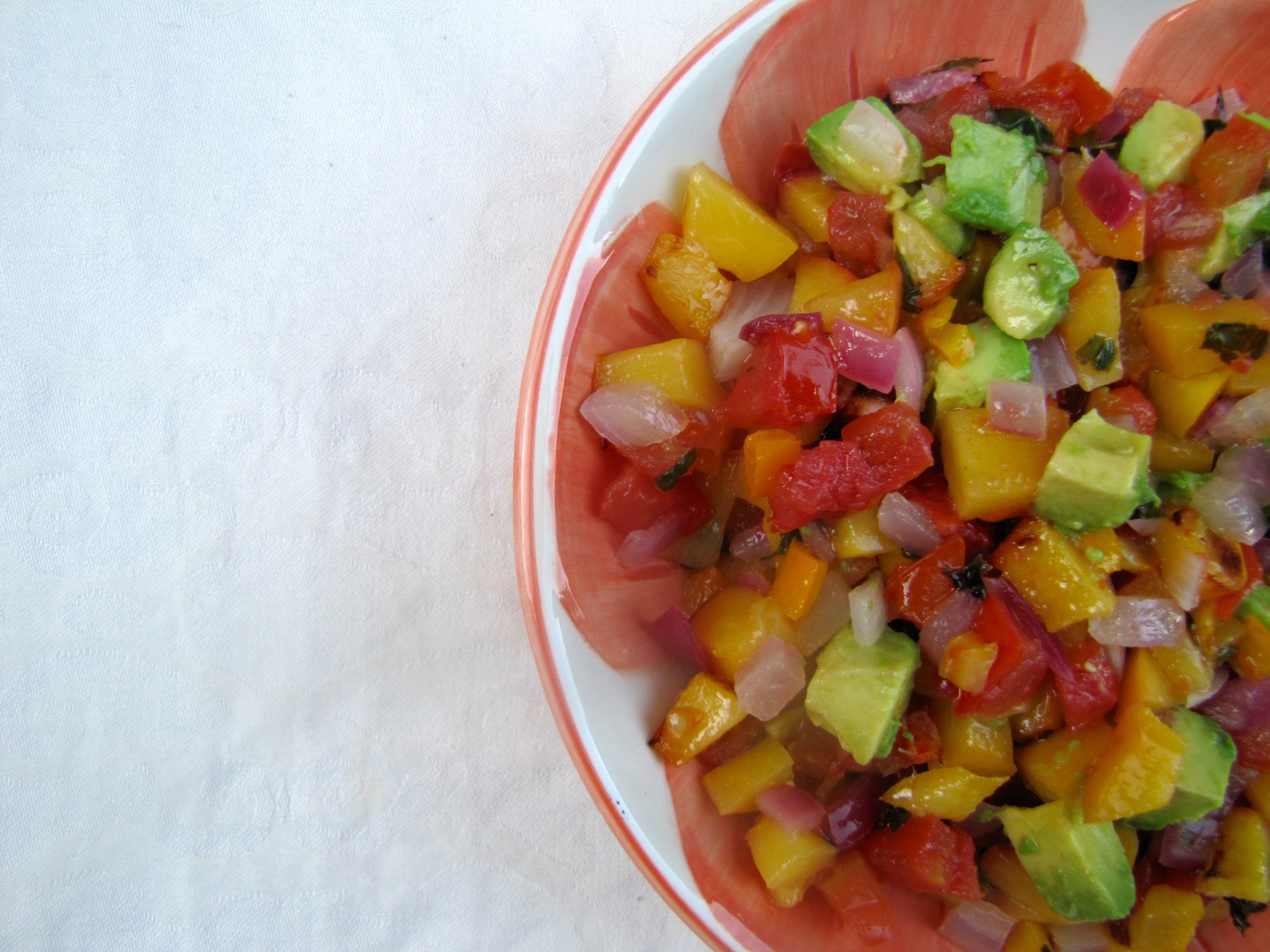
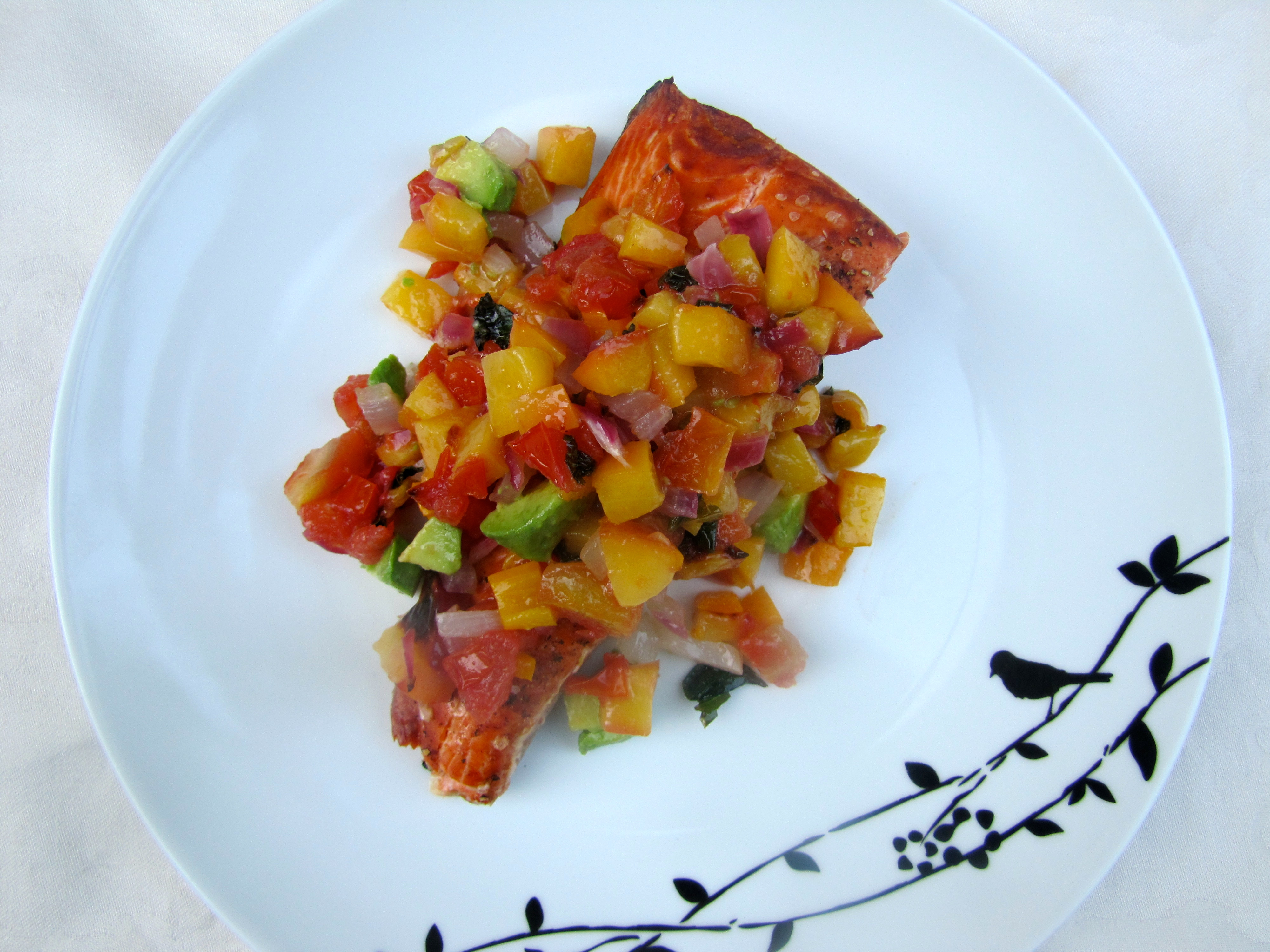
Roasted Nectarine Salsa on Wild Salmon

1 comment

I am really enjoying the abundance of ripe, fresh fruit this summer and the abundance of fresh wild sockeye from our CSA. I combined my love for nectarines and salmon tonight and came up with this meal that we devoured in minutes! We enjoyed this with a side of roasted beets and mixed baby potatoes.

Ingredients:

1 large tomato

1/2 red onion

1 nectarine

1 jalapeño, seeded

1 small sweet Italian pepper

1 lb wild salmon fillet

1 avocado

2 tbsp fresh basil, chopped

Salt and pepper to taste

1 tbsp coconut oil, melted

Directions:

1) Wash and dice your first 5 ingredients into small, uniform pieces.

2) Toss them in melted coconut oil and spread them on a baking sheet lined with parchment paper.

3) Place your baking sheet on the top rack of your oven and set your broiler to high.

4) Broil for 5-10 minutes or until salsa just begins to blacken. Remove and let cool.

5) Place your salmon on a baking sheet lined with parchment paper.

6) Sprinkle with salt and pepper and place on the top rack of your oven and broil on high for 10-15 mins until salmon is cooked through.

7) While the salmon is broiling, dice your avocado and gently mix it into your salsa. Add the chopped basil and toss gently to combine.

8) When salmon is cooked through, remove and place it on your plate. Top with your salsa and enjoy!

salsaonsalmon


Post

Whole 30 – Week 2 – Meal Plan

1 comment

Hey there! Wow, this no caffeine thing has been ROUGH. For the first 3 days I had a non stop pounding headache, was exhausted during the day, and awake in the middle of the night. By day 4 I was feeling way better though, and I’m excited to see how things improve even more over the next few weeks.

Here’s my meal plan for this week. A few breakfasts that I will double, and leftovers for lunch every day. 

Breakfast:

Yams and Eggs (There isn’t much to this “recipe” but it’s one of my favourites. I chop the yams into cubes and fry them in coconut oil and steak spice until cooked through. I remove them from the pan and cover them to keep them hot. Then I quickly fry 2 eggs and put them on top of the yams. You could partially boil the yams at the beginning of the week to make them quick and easy to fry up in the morning.)

Sweet Potato Breakfast Skillet

Potatoes with Kale and Bacon

Crustless Quiche

Dinner:

Mexican Meatza

Chocolate Chili on spaghetti squash

Spicy Coconut Shrimp Bisque (skip the corn)

Sweet Pineapple Ginger Meatballs 

Lemon Garlic Chicken on Zoodles and Kale

Italian Sausage and Zoodles

Moroccan Spiced Salmon

I suggest tripling the Chocolate Chili and Spicy Coconut Shrimp Bisque and freezing them for Whole30 emergencies. Those are two of my favourite recipes…you won’t be sorry!

Enjoy!

Post

Whole30 – Week 1 – Meal Plan

3 comments

I’m doing the official Whole30 challenge again! The first time around, I was just focused on SURVIVAL. It gets easier every time, and so this round I’m adding a new challenge. This will be my first time completely cutting out caffeine. I only drink 1 cup of plain black coffee in the mornings and the occasional coffee in the afternoon or evening if I’m at a special occasion or family event, but I’ve recently had some adrenal issues and so I’m interested to see if cutting it out completely will make a noticeable difference. Right now I really treasure my steaming cup of coffee every morning so this is definitely going to be difficult for me. Wish me luck!

One of my most important tips for completing a successful Whole30 is meal planning. I really enjoy meal planning and so I’ll be posting my weekly plans here for any of you who don’t enjoy it or need inspiration or ideas for recipe resources.

Each week I will post 7 dinners and 3-4 breakfasts. I will double my breakfast recipes for leftovers, and I will eat dinner leftovers for lunch each day. (Another tip for Whole30: cook once, eat two or three times.) Remember to make sure any sauces and meats are sugar free. These are the base recipes for each meal, but I will add steamed veggies, roasted veggies or huge salads to all of these meals.

Hope this helps!

Breakfast

Eggs in Purgatory by Nom Nom Paleo

Breakfast Skillet

Breakfast Hash 

Apple Pork Breakfast Sausage by SEP, sautéed swiss chard, and fried yams.

Dinner 

Jalapeño Lime Chicken Wings by SEP

Garlic Pork and Cauliflower Rice (Crockpot) by Paleomg

Lemon Roast Chicken by Jamie Oliver

Thai Pork and Veggie Meatballs by Paleomg (skip the honey)

Lemon Rosemary Salmon by Diane Sanfilippo

Mango and Avocado Salsa on Salmon by Nom Nom Paleo

Balsamic Beef Roast by Civilized Caveman (skip the white wine)

Never heard of Whole30? Check out the official website, and read about how it completely changed my life.

Post

Life After Whole30

13 comments

So you’ve completed the Whole30 challenge, but now what? How do you make this work in real life? After some trial and error and multiple Whole30 challenges, I’ve found what works for me, and I think this process will help you find what works for you too. 

Step 1: Reintroduction

I really messed this part up after my first Whole30 challenge. If I remember correctly, I ended my challenge with a binge meal at Olive Garden of all places. In a single large meal I reintroduced dairy, gluten, alcohol and sugar. Trust me, this is NOT the way to celebrate! Needless to say I ended up on the toilet pretty soon after my meal, but I had no idea which one of those things caused it.

A lot of people miss this incredibly important step of the process: reintroducing the food groups that you have cut out for 30 days. You’ve successfully cleansed your body from all potentially harmful food, and now is your chance to see what kind of reaction your body will have to each of these foods, telling you whether or not you should eliminate them completely.

While still keeping your diet Whole30 compliant, reintroduce a food group, one at a time, and wait three days before reintroducing the next previously restricted food group. During those three days, be in tune with your body and keep a close watch for any changes. Watch for all kinds of reactions, ranging from sluggishness, bloating, or pimples, to diarrhea, constipation, or stomach cramps. After 3 days, while still keeping your diet Whole30 compliant, reintroduce another food group. Watch for changes in how you feel. Repeat this process until you’ve reintroduced all of the food groups that you feel like you missed out on during your Whole30 challenge. Don’t bother reintroducing foods that you did not miss and are not interested in including in your diet.

It Starts With Food by Dallas and Melissa Hartwig goes into a more detailed description of how to do this and I highly recommend buying it. You can also find their complete reintroduction plan on their website, Whole30.

Here is a sample schedule of how you could reintroduce food. This is just the order I chose to reintroduce foods into my every day diet but you can alter it to your preferences and needs.

Day 1 (Day 31 of Whole30): Reintroduce dairy. Throughout the day, add some cheese, milk or yogurt to your regular meals. Watch for signs of intolerance. Many people get stomach cramps, pimples, a runny nose and congestion from dairy products. Decide how you feel and if it is “worth it” to add dairy back to your regular diet. For myself, dairy gives me dark circles under my eyes, a runny nose the next day, and a general feeling of tiredness. Because of this, I keep it out of my regular diet. However, because it doesn’t send me running to the toilet or give me intense stomach cramps, I have no problem indulging in some dairy as a treat once in while at a birthday party or similar situation. I know I won’t feel my best the day after, but it’s not going to make me extremely ill.

Day 4 (Day 35 of Whole30): Reintroduce grains/gluten. Have a bagel or some toast, some crackers and maybe some rice throughout the day. Just as you did with the dairy, pay attention to any reactions you may have. For myself, bread make me constipated and sluggish. I hate how I feel for 24 hours after I eat it and so I avoid it as much as possible. Some grains bother me less than others but almost all make me feel sluggish and so I keep them out of my regular diet.

Day 7 (Day 39 of Whole30): Reintroduce sugar. This was such an eye opener for me. I had no idea how sensitive I am to sugar until I did this reintroduction. Just a handful of M&M’s can give me a major sugar crash about 20 minutes after indulging. With the exception of high quality very dark chocolate, I reserve sugar for special occasions. I rarely sweeten things in my regular diet, but if I do then I use organic raw honey or organic maple syrup in small quantities.  Pay special attention during this evaluation as the signs may not be as physical and obvious as they can be with gluten or dairy.

Step 2: Eating Well for Your Body

So now you know which foods irritate your body and which foods make you feel great. You’ve decided which foods are worth adding back into your regular diet either consistently (every day), moderately (2-3x per week), or rarely, for special occasions. Now you get to practice this in your life and get comfortable with your new way of eating. Learning to meal plan and meal prep takes time at first, but with practice it becomes quicker and simpler. It used to take me a few hours each week to make my meal plan, write out the corresponding grocery list, and chop/prepare my food for the week ahead, but now I spend approximately 20-30 minutes making my meal plan and shopping list and maybe another 30 minutes preparing food.

Every Sunday I receive an email from my CSA group letting me know what veggies I will be receiving on the following Tuesday. Once I’ve skimmed the email and got an idea of the contents, I sit down and make my meal plan. I thumb through my favourite cookbooks (Against All Grain, The Paleo Kitchen, Well Fed 1&2, Practical Paleo, Nom Nom Paleo, etc) and find recipes that use the produce I will be receiving. I choose 7 dinners and 3 or 4 smaller meals for breakfast and lunch. As I write down the title of the meal and page number of the cookbook it’s from, I jot down any extra ingredients that I will need to buy on a separate piece of paper, and that is my grocery list for the week. (With more and more practice and exploring, I’m aiming to make this extra ingredients list as small as possible so that I am using only what comes in my CSA box.)

When I receive my CSA box on Tuesday, I wash and chop most of my vegetables and separate them into produce bags or glass containers. If I know that I have an exceptionally busy week ahead, I will chop and partially cook any yams, potatoes or beets. You can partially steam any dense vegetables like broccoli and cauliflower, or you can also pre-shred your zucchini and yams for Breakfast Hash. If I have any vegetables left by the end of the week, I throw them all together in a Breakfast Skillet.

Each week I visit my local butcher shop and get just enough meat for the week, corresponding with the meals I have planned for. I ask them to wrap it all separately for each individual meal so it defrosts quicker on the day I need it. In Well Fed 1 and 2, Melissa Joulwan lays out a detailed description of how to cook and prep your meat for the week. I have the time to cook mine fresh each day, so I don’t follow her plan, but I know others who do and find it extremely helpful.

I cook once and eat two or three times from that meal. I love leftovers and never let any food go to waste. I often eat leftover dinner for breakfast, and leftover breakfast for lunch.

Why?

Where do I even begin? Because I’ve never felt so strong as I do now, after about 1.5 years of consistently eating this way. Because I no longer have any guilt related to my food choices. Because by choosing to live this way, I can keep up with my 3 year old and 1 year old and still have energy to spare. Because I’m free from the anxiety and confusion surrounding my food choices. Because I’m showing my children that this lifestyle is a real, attainable and sustainable way to live.

Read more about why and how Whole30 Changed My Life and helped me recover from years of disordered eating.

Some of my favourite meal planning resources:

Nom Nom Paleo

The Clothes Make the Girl

Against All Grain

PaleOmg

Civilized Caveman

Photograph by the incredibly talented Vanessa Voth Photography.

Post

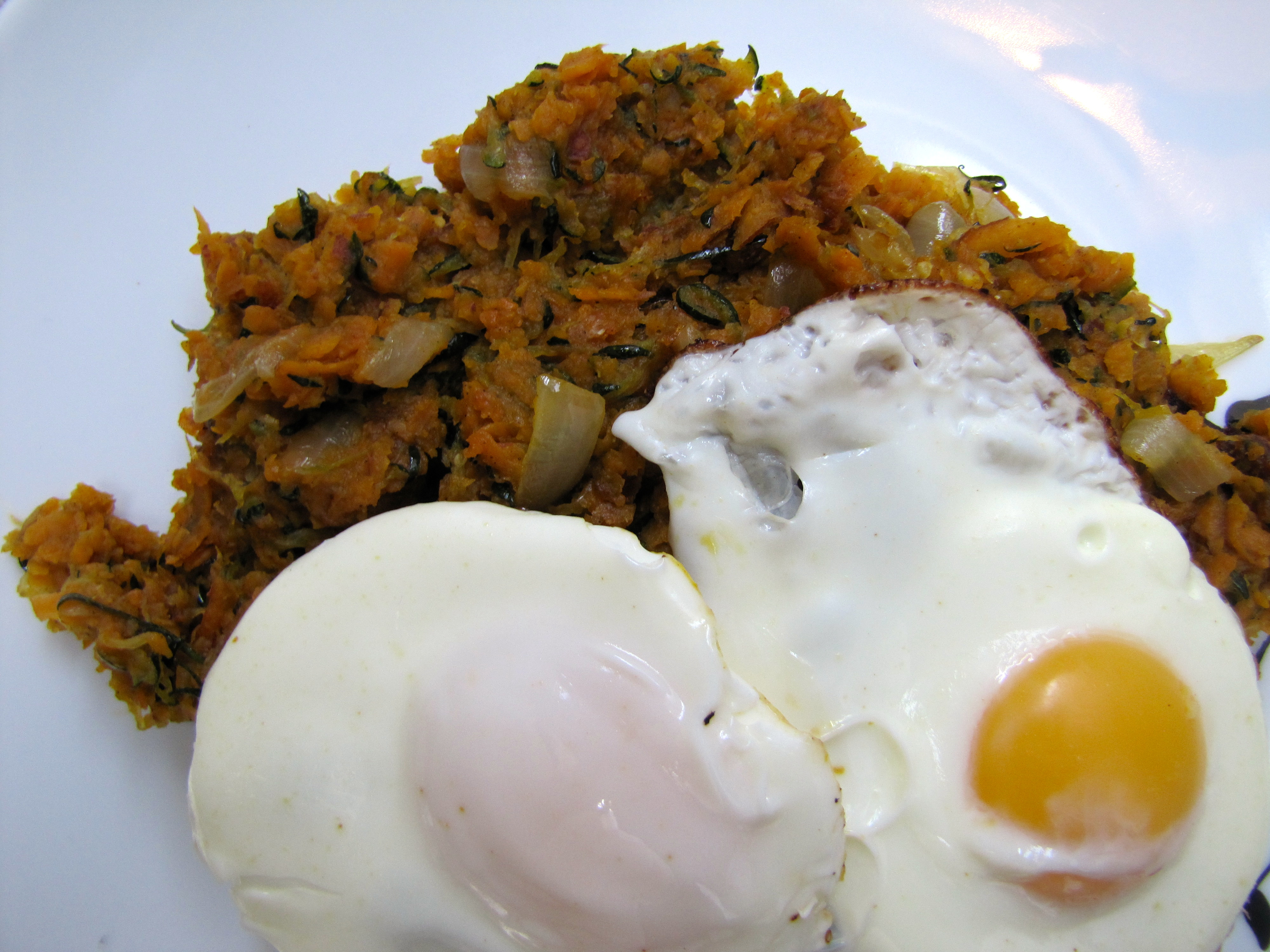
The Meal That Started It All – Breakfast Hash

3 comments

This month marks my 2 year Whole30-versary!

Two years ago, a close friend of mine posted an Instagram photo of her zucchini and yam hash for breakfast with the hashtag ‘Whole30’. I asked her about it, and she gave me the Whole30 rundown. I completed the Whole30 challenge, and have been on a journey of health ever since. 

(Side note: The friend happens to be a beautiful writer and very talented photographer. Check out her blog here.)

This meal is still one of my favourites for breakfast, or post workout. I’ve seen variations of the recipe on several different food blogs and I have no idea where it originated, but here’s the gist of it.

Ingredients

1 zucchini

1 yam

1 sweet onion, peeled and chopped

1 tsp sage

2 eggs

salt and pepper to taste

1 tbsp coconut oil

Directions

1) Using a food processor or cheese grater, shred your yam and zucchini. 

2) Heat a large frying pan over medium heat and melt your coconut oil in it. 

3) Place your shredded yam and zucchini and your chopped onion in your pan and mix to combine. 

4) Sprinkle with sage and mix again.

5) Allow the yam and zucchini to cook until you start to see some crunchy brown parts starting to brown, about 10-15 minutes.

6) Remove your hash from the pan when it is cooked to your liking and cover to keep it warm.

7) Fry your eggs in the same pan, however you desire. My favourite way is to gently crack them into the pan, pop the lid on, and leave them to cook for 3-5 minutes until the whites are cooked through and the yolks are still runny.

8) Carefully slide your eggs out of the pan and on top of your hash. Sprinkle with salt and pepper and enjoy!

hash2

Post

End of the Week Breakfast Skillet

4 comments

breakfastskillet


Every Tuesday we get a big box of produce delivered through our CSA program. It’s enough to completely fill our fridge and then some, so every Monday I clear out whatever is left from the previous week and fry it up for breakfast. This is a quick and simple meal that is ever changing, and really doesn’t require a recipe. Here are a few steps for any newbies in the kitchen, but those of you who already have been cooking for awhile, just go for it and see what delicious combinations you come up with!

Ingredients

1 tbsp coconut oil

1 sweet onion, peeled and diced

1 apple, washed and diced

Any vegetables you have left in your fridge, washed and chopped to uniform size

Some form of protein (a meal is not a meal without protein the size of your palm!). For example: two fried eggs, nitrate free/sugar free farmer’s sausage, chorizo sausage, etc. Experiment with whatever you have in your fridge.

Directions

1) Heat a large frying pan over medium heat and melt coconut oil in it.

2) Fry your onion and whatever meat you have chosen until cooked through.

3) Add in your vegetables, starting with the hardest vegetables (yam or potato), and then adding the softer ones a few minutes later so they don’t get soggy. 

4) Combine and fry until cooked through. Simple and delicious!

Some of my favourite combinations are: 

Chorizo, yam, leek, apple, bell peppers, and kale.

Farmer’s sausage, potato, apple, bell peppers, swiss chard, and sauerkraut.

Ground pork, zucchini, peppers, fennel, and apple.

Pictured: Farmer’s sausage, red potato, swiss chard and apple.

I would love to hear what delicious comments you come up with or suggest! Leave a comment and share your insight. 


Post

A Healthy Vacation – Part 2 – Camping

6 comments

I’ve had an on again, off again relationship with camping my whole life. My (brave) parents took all four of us kids camping every single summer for as long as I can remember. And I’m not talking weekend camping, I’m talking 2-3 weeks at a time with no showers, no flushing toilets, no fancy RV. I loved it as a young kid, hated it as a moody teenager, and now I’m back to loving it as an adult. Looking back, I’m so incredibly grateful to them for giving us those amazing, natural, old school, get-outside-and-breathe-that-fresh-air kind of experiences. Just don’t tell them I said that.

I’ve been hearing all summer from people that it’s impossible or just too difficult to stay healthy on vacation, and especially while camping. I decided to try and prove them wrong. (Read Part 1 to see a detailed explanation of how we stayed healthy in Whistler here.) 

You CAN eat healthy and keep up with your balanced lifestyle while camping with minimal preparation, and still leave room for some treats here and there. My husband and I just finished a 5 day road trip to Banff and Jasper, British Columbia, and I promise you we didn’t climb mountains with hot dogs and muffins in our bellies.

Hiking around Lake Louise

Hiking around Lake Louise

Here’s what I packed and how we enjoyed our adventures, completely guilt free.

In an electric cooler I packed:

1 batch of frozen homemade meatballs (previously made and frozen before our Whistler trip), separated into ziploc freezer bags of 5 for quick defrost

1 batch of frozen homemade sausage patties (previously made and frozen before our Whistler trip), separated into ziploc freezer bags of 4 for quick defrost

6 hardboiled eggs

1 pound of frozen grass fed beef stew meat, cut into 1 inch chunks

1 frozen farmer sausage 

4 bell peppers, chopped

3 sweet onions, peeled and chopped

Approximately 20 mushrooms, washed

2 large zucchini, chopped

5 red potatoes, scrubbed 

4 apples

1 bunch of bananas

A big bag of carrots

3 packs (about 350g total) of sugar free, nitrate free beef jerky

4 Larabars

1 glass container of our leftover breakfast from the morning we left (a skillet mixture of chicken sun dried tomato sausage, kale, swiss chard, peppers, potatoes, onion and apple)

A sealed glass container of coconut oil

For cooking supplies I packed:

2 plastic plates

2 forks and 2 knives

1 sharp knife

Heavy duty aluminum foil

1 cutting board

1 frying pan

Propane stove (with propane and matches)

Garlic Salt

Pepper

We dropped our kids off with my parents and left late in the afternoon and drove straight to Golden, BC. We ate before we left and then snacked on veggies, hard boiled eggs, and meatballs for a quick dinner in the car. The next morning we left early to finish our drive and had a similar meal for breakfast in the morning, eating the sausage patties instead of meatballs. (Because I separated the meatballs and sausage patties into ziploc freezer bags, I was able to pull them out of the cooler and let them defrost for 10-15 minutes before eating them). 

For the next three nights we camped in Jasper National Park. We spent each day exploring and adventuring around Jasper and Banff and spent as little time as possible at our actual campground, so here are some of the quick combination meals I came up with for dinner each day. I made a little extra each night to warm up in a pan on the propane stove for breakfast in the morning. Lunch was always a mixture of eggs, veggies, jerky, Larabars, meatballs and sausage patties.

IMG_2192

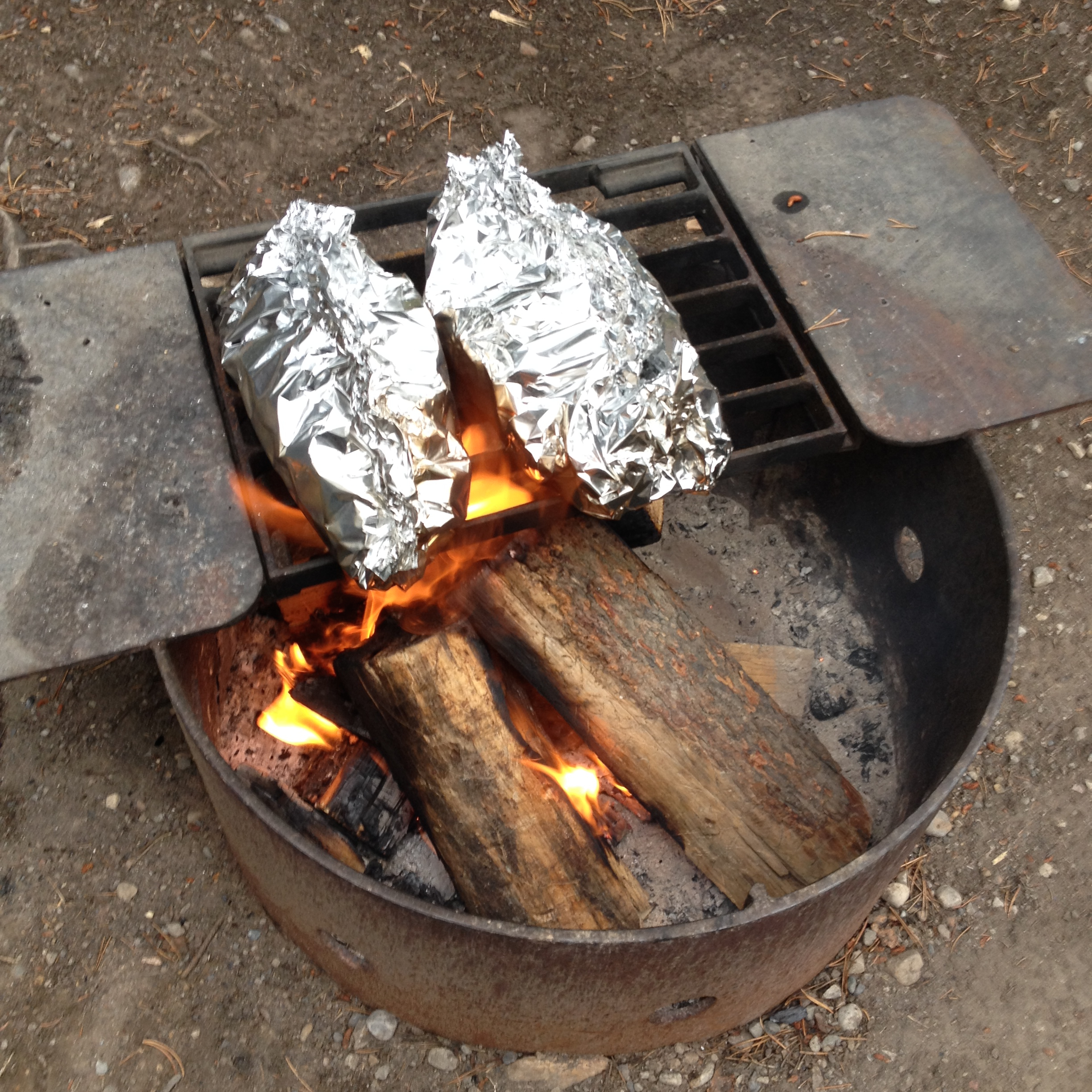
Tinfoil Steak Dinner

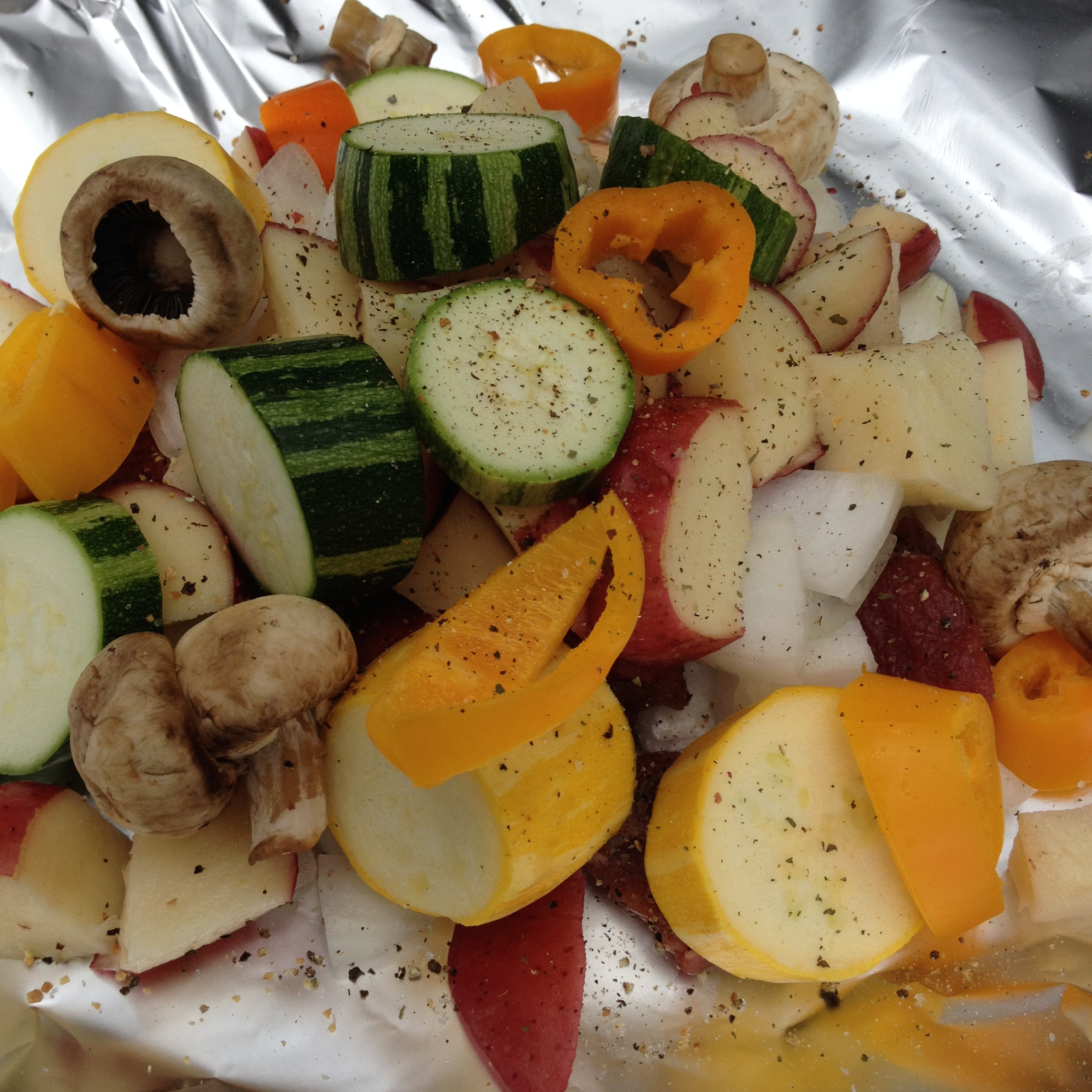
I piled half of the stew meat on 2 large torn pieces of layered tinfoil. I sprinkled it with garlic salt and pepper, then added the diced potatoes, peppers, mushrooms, and zucchini. I wrapped it in the tinfoil and sealed it tightly at the top, and cooked it on a grate on top of the campfire for approximately 20-30 minutes. Depending on the size of your stew meat chunks and vegetables, check on it every 15 minutes or so until it’s cooked to your liking. We ate it right out of the tinfoil to save dish washing time.

Some possible variations: throw in a splash of balsamic vinegar and olive oil, or steak spice.

dinnerfire

Tinfoil Farmer Sausage Dinner

I did the same thing as the Steak Dinner, just replaced the stew meat with sliced farmer’s sausage. Farmer’s sausage usually has a high salt content, so skip the salt on this one and add chopped apple to balance the flavours. This cooks much quicker, so check every 10 minutes or so for doneness. 

If we had stayed longer, I would’ve done the same thing with a cut up chicken breast, pineapple, red onion and more vegetables. By making different combinations, you can have different flavours each night, all healthy and satisfying.

steakdinner

Eating this way gave us lots of energy for all of our hiking and canoeing adventures, and left room for treats in the cute little town of Banff, at the Lake Agnes Teahouse, and the occasional S’more. If you skip the extra treats, the whole road trip and camping trip could easily be Whole30 approved.

We are hoping to squeeze in another short camping trip before the summer is over, so leave a comment with some of your healthy camping ideas. I’d love to try them out!

Post

A Healthy Vacation – Part 1 – Whistler

4 comments

Over the course of this summer, I’ve heard a lot of this:

“I’ll start eating healthy after my vacation is over.”

“It’s impossible to eat healthy on vacation.”

“It’s too hard to eat healthy while camping.”

“Whole30 is impossible on vacation.”

Of course, I took this on as a challenge to prove that it IS all possible, and that it’s not that difficult or time consuming with a little guidance and prep work. We had two short trips almost back to back, giving me two opportunities to test out my ideas. (Read Part 2 – Camping to see how we stayed healthy on our road trip to Alberta).

First, we got to spend a weekend in Whistler with our good friend and her daughter. We stayed in a lodge with a full kitchen, making this the easier of the two challenges. Still, we only had 2 nights there, and I wanted to spend as little of that time in the kitchen as possible, so I prepped almost everything ahead of time.

whistlerfood

Here’s a complete list of what I packed:

Green beans

Kale/Swiss chard mix, washed and torn

Yellow carrots

1 large zucchini

4 avocados

1 bunch of bananas

Cherries

Apples

1 dozen eggs, half of those hardboiled

Chicken (2 large bone-in breasts and 2 large thighs)

Homemade sausage patties

Homemade meatballs

Partially cooked diced yams

Cooked beets

Cashews

Larabars

Date/Coconut balls

Black coffee

At first glance, all that cooked food may look like a lot of prep work, but it really wasn’t. I like to keep it simple and use shortcuts.

For the chicken, I threw it all in a crockpot the night before with about 1 tbsp of rosemary, 1 tbsp of basil, 1 sliced lemon, salt and pepper, and drizzled olive oil on it. I let it cook all night on low, then let it cool in the morning and packed it away in tupperware. This took about 5 minutes of hands on time.

For the beets, I also used the crockpot. I scrubbed them, threw them in the crockpot and covered them with an inch or two of water. I cooked them on high for 2 hours. Once they cooled, I slid off the peels and then packed them in tupperware. Maximum ten minutes of hands on time.

The meatballs and sausage patties were what took the most time, and so I doubled both recipes knowing that I could use the extra for camping the next week. For the meatballs I used the Greek version of Melissa Joulwan’s meatballs. I packed half of them in a tupperware and froze the other half in a ziploc freezer bag for camping. For the sausage patties, I used my absolute favourite homemade sausage recipe from Stupid Easy Paleo, found here. I did the same as I did with the meatballs, packing half in a tupperware container and freezing the rest in a ziploc freezer bag for camping the next week. This only took about 30 minutes of hands on time the night before our trip.

While the meatballs and sausage patties cooked in the oven, I peeled and chopped about 6 small yams. I fried them in coconut oil but left them slightly hard so that they wouldn’t get mushy over the next few days. This took about 15 minutes of hands on time, and about 15 mins of frying time. 

The morning of our trip, I threw it all in a cooler and unloaded it all in the fridge once we arrived. Over the weekend, we simply ate different combinations of all these foods. Bonus, we came home with a ton of leftovers that we ate at home over the next couple of days. All of this food was Whole30 approved, and because I’m not actually doing the Whole30 challenge this month, eating this way for our 3 main meals a day left room for treats like this that I found at the Whistler Farmer’s Market:

applebaconpie

Apple Bacon Pie. Seriously.

Spending the small amount of time to do this ended up saving us a ton of money (dining out in Whistler is expensive!), a lot of frustration and exhaustion trying to keep our two wiggly children quiet and entertained at restaurants, and left us with so much extra time to explore and have fun. 

Try it, I know you can do it!

(Side note: I was so happy to bump into Caveman Grocer at the Whistler Farmer’s Market. Check her out!)

Kayaking in Whistler

Kayaking in Whistler

Morning run around Lost Lake, Whistler

Morning run around Lost Lake, Whistler

Post

Basil Kale Pesto

Leave a reply

pestoI received a lovely bunch of fresh basil in my CSA delivery this week, so I figured now is the time to attempt my first homemade pesto sauce. I played around with it a bit today and came up with this combination that I absolutely loved.

Ingredients

3 cups fresh basil leaves

2 cups of kale, chopped and stems removed

5 cloves of garlic, oven roasted

1/2 cup of walnuts, oven roasted

1/2 cup extra virgin olive oil

Juice from half a lemon

Pinch of salt and pepper

Directions

1) Peel and smash your garlic cloves. Place them on a cookie sheet and roast them under the oven broiler until browned, about 5-10 minutes. Remove and let cool.

2) Spread your walnuts on a cookie sheet and do the same as you did with the garlic.

3) Throw all your ingredients into a food processor or Vitamix and blend until you reach desired consistency. Some like it chunky while others prefer a very smooth pesto.

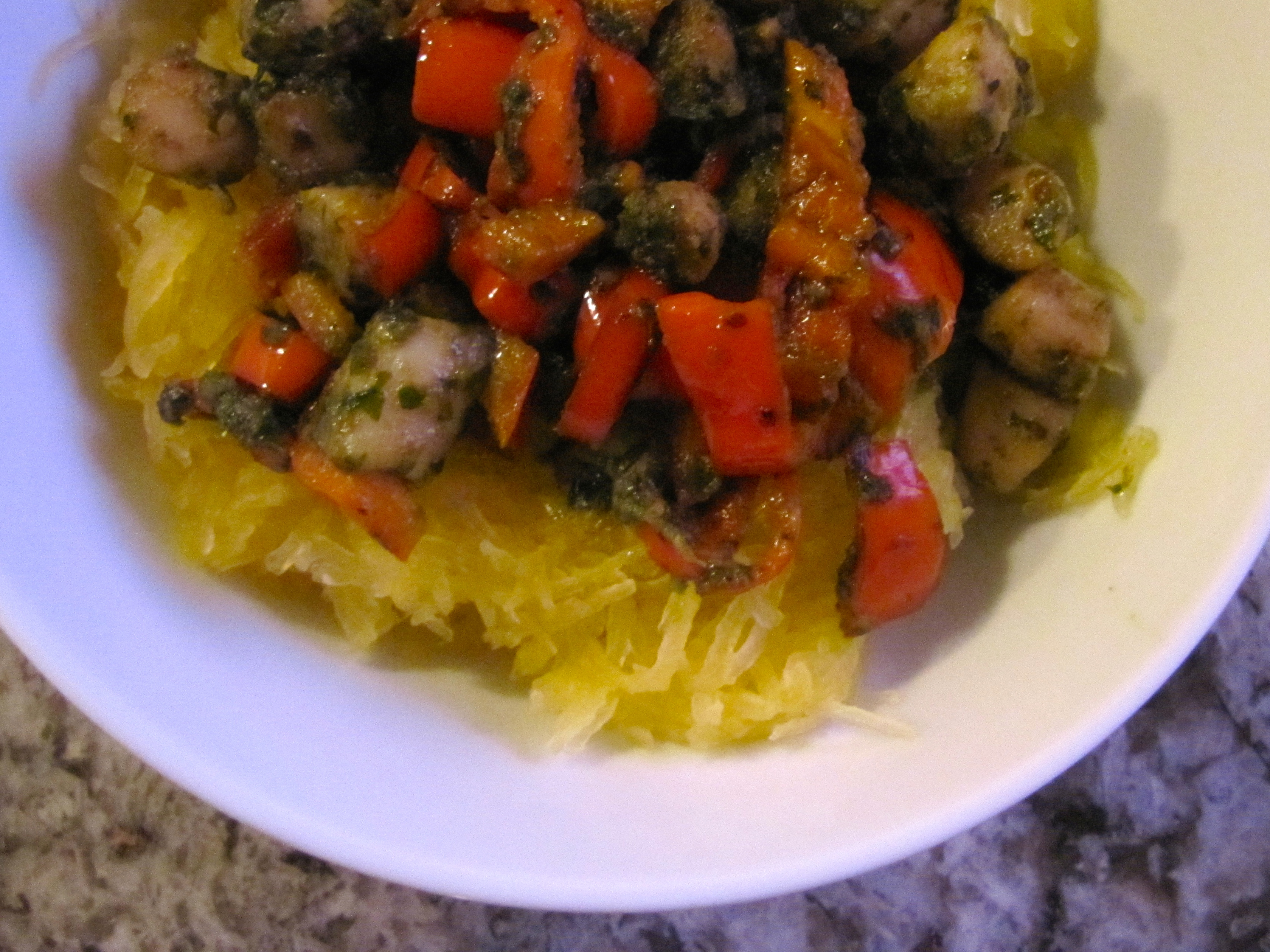
We enjoyed this with scallops and red peppers over spaghetti squash for dinner. Delicious!

pestodinner


Post

Salmon and Lemon Pepper Zoodles

1 comment

This summer we’ve been enjoying so much wild salmon from the Community Supported Fishery that we are a part of. I’ve been experimenting with a bunch of different recipes (basically trying to find which one Charley will eat with the least amount of whining) and have found that this one that I have just barely adjusted from Practical Paleo by Diane Sanfilippo is simple, delicious, and great for repurposing leftovers the next day. I have a hunch that Charley might actually like it, although she would never admit it.

I happily eat leftovers every day as a way to save time in the kitchen. When you cook absolutely everything from scratch, leftovers are a necessity. With that in mind, i reheated this salmon from last night’s dinner and added some simple zucchini noodles and red pepper, and it only took about 15 minutes of my time. Enjoy!

Ingredients

For the salmon:

1 lemon, thinly sliced

1 lb wild salmon

1-2 tbsp of coconut oil

2 tbsp fresh chopped rosemary

Pinch of salt and pepper

For the zoodles:

1 large zucchini, spiralled into zoodles

5 baby bell peppers, chopped

2 tbsp Tessemae’s Lemon Chesapeake sauce

Directions

For the salmon:

1) Preheat your oven on the low broiler setting.

2) Place some tin foil on a baking sheet and grease with coconut oil.

3) Place the salmon skin side down on your baking sheet and sprinkle with salt and pepper.

4) Sprinkle the chopped rosemary on the salmon, and top the salmon with the lemon slices.

5) Broil on low for approximately 10-15 minutes, depending on the thickness of your salmon.

For the zoodles:

1) Heat a large pan over medium heat and add 2 tablespoons of Tessemae’s Lemon Pepper sauce.

2) Fry your peppers for a few minutes until they begin to soften.

3) Add your zoodles and combine with the peppers. Fry for 4-5 minutes, until they are softened to your liking.

4) Remove and place in a bowl or on a plate. Top with your leftover salmon.

IMG_0924

Tessemae’s sauces are Whole30 approved and a great addition to your kitchen. They make dishes like this super quick and easy! You can order them online or find them at Whole Foods.